
Define the actual concern
Clarify whether the priority is renovation-related VOCs, persistent odour, surface hygiene support or another issue. Different concerns require different evidence, controls and product selection. Avoid treating an entire building before the problem is understood.
Map occupancy and surfaces
Identify peak operating hours, sensitive users, cleaning schedules and high-use zones. Review each proposed substrate for compatibility. Exclude food-contact surfaces, medical devices or other controlled areas unless the product documentation and project approval specifically cover them.
Plan a contained first phase
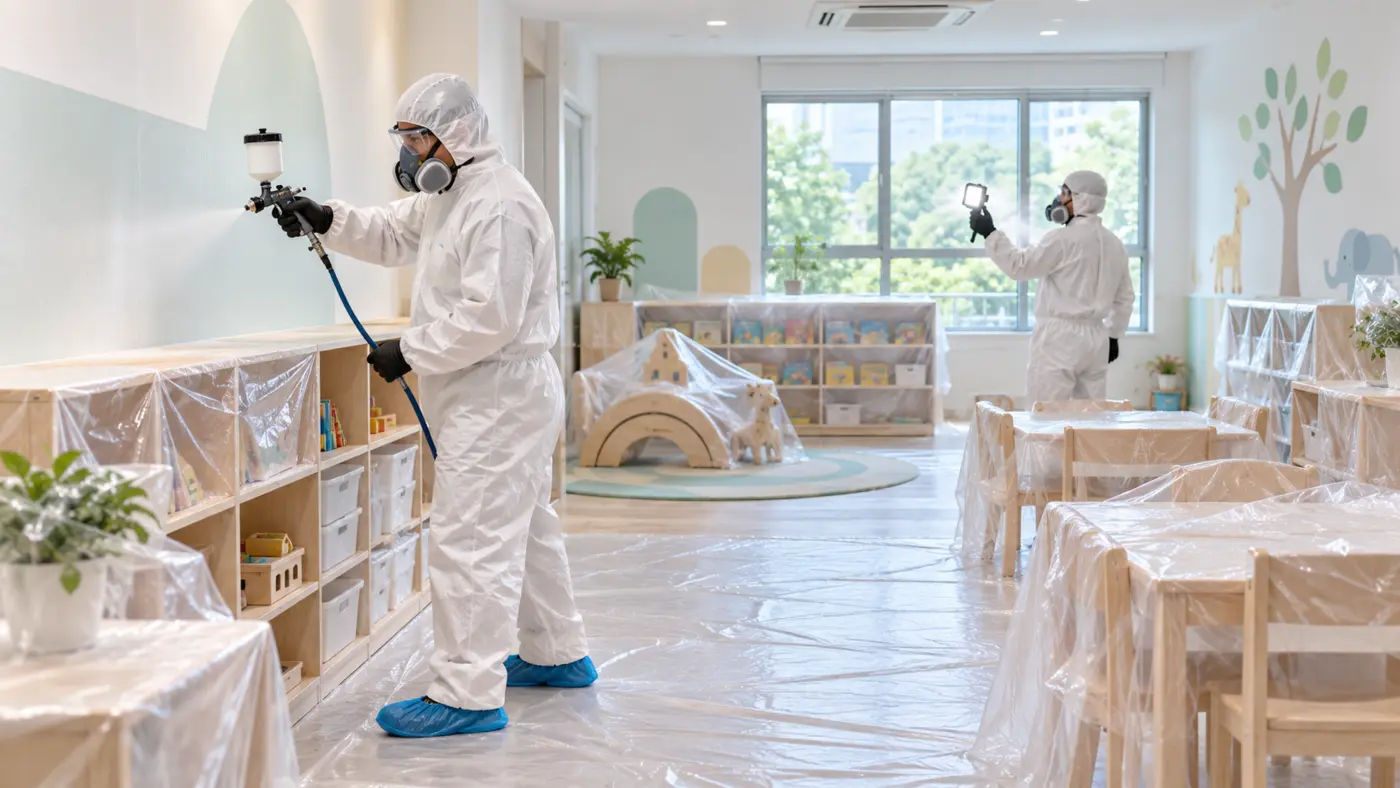
A representative pilot area can confirm application logistics, appearance and operational disruption. Schedule preparation, application, ventilation and reopening around the facility’s activities. Communicate access restrictions clearly to staff and contractors.
Align with cleaning procedures
Document how treated surfaces should be maintained. Cleaning products, abrasion and frequency may affect durability. Facilities and cleaning teams should receive a simple handover record showing what was treated and any maintenance requirements.
Review results responsibly
Assess the pilot against the agreed objective and evidence plan. Results may vary with treated area, environmental conditions, light exposure, pollutant loading and maintenance. Expand the scope only when the pilot supports the intended use.